Treatment
Set against the vibrant backdrop of the KleinLife Center in Northeast Philadelphia, The Roots We Carry opens with scenes of children painting, dancing, and acting—expressing emotions too complex for words. Their guide is Masha, a Ukrainian-born therapist who immigrated to the U.S. at 13 and now leads a program for Ukrainian refugee children using creative arts as a bridge to healing.
We follow three children—some attending the summer camp for the first time, others returning—each carrying the invisible weight of displacement. Some live with grandparents, others with distant relatives, while their parents remain in Ukraine. Through vérité footage and observational scenes, we capture the challenges of learning a new language, adjusting to school, and processing trauma while longing for home.
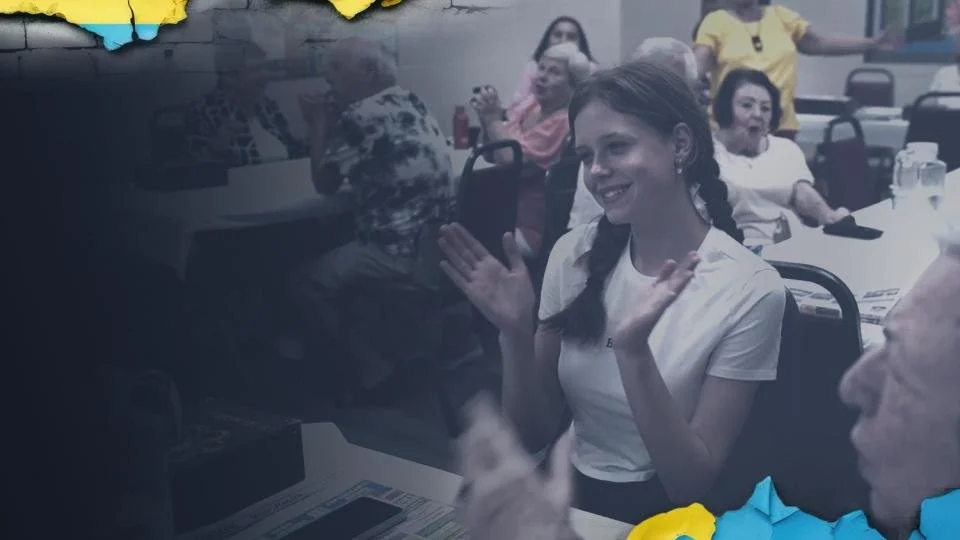
A key thread of the film is the unexpected connection between these children and local elders—Holocaust survivors and war refugees—who at first are positioned to be interviewed by the kids. But slowly, it’s the elders who begin asking the questions. With Masha’s gentle coaching, these conversations grow into something transformational.
One of the most emotional activities involves symbolic suitcases, packed with letters, drawings, and small personal items from both generations—shared in quiet, powerful exchanges.
As the first summer ends, we continue following the children into the fall, winter and the next summer and afterschool program —into their homes and therapy sessions—revealing how the work at KleinLife ripples into their everyday lives.
The film culminates in a party for the children and seniors to celebrate their two years together. In a time of global division and rising antisemitism, The Roots We Carry honors the resilience of refugee children, the wisdom of survivors, and the power of a Jewish center that continues to live out its mission of Tikkun Olam—to repair the world through shared humanity.